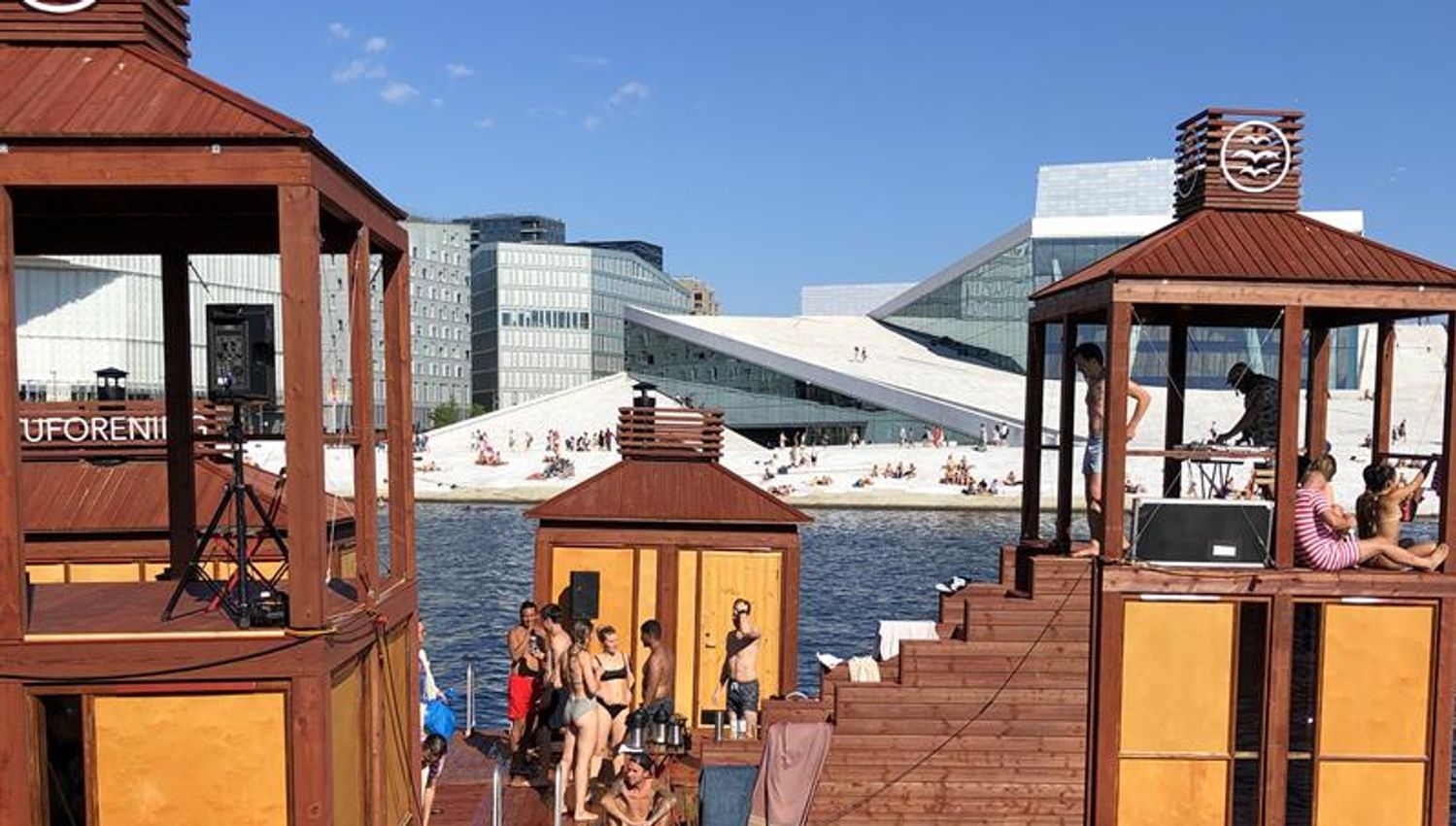
The Best Floating Saunas in Norway — On Fjords, Lakes & Harbours
Discover Norway's best floating saunas — from Oslofjord to Lofoten. Book a boat sauna and experience the perfect heat-and-cold contrast on the water.
There is something deeply Norwegian about stepping out of a roasting hot sauna and jumping straight into open water. Now imagine doing that on a wooden raft moored in a harbour, on a glassy fjord, or drifting across Scandinavia’s largest lake. That is the floating sauna experience — and Norway has made it an art form.
Over the past decade, floating saunas have spread from the harbours of Oslo to remote northern fishing villages. They come in every shape: converted ferries, purpose-built barrel boats, elegant architect-designed rafts, and hand-built wooden huts on pontoons. All of them share the same essential promise — intense heat, cold water, and the kind of stillness you can only find on the water.
Why Floating Saunas Are Special
A regular sauna is wonderful. A floating sauna adds an extra dimension that is hard to describe until you have tried it.
When you are moored in a harbour or anchored on a fjord, the cold plunge is not an afterthought — it is the main event. You step from 80–90°C heat directly into seawater, lake water, or river water at whatever temperature nature provides that day. In summer, that might be a bracing 18°C. In January, it could be well below zero, with ice forming around the hull.
The combination triggers a physiological response that feels almost euphoric: blood rushes back to the skin, the heart rate spikes and then settles, and the body floods with endorphins. Norwegians call the post-plunge state “the afterglow” — a deep, radiating warmth that lasts for hours.
Beyond the physical, there is something about being surrounded by water on all sides that changes the atmosphere inside the sauna. Conversations slow down. Phones stay in bags. People watch the light on the water and breathe.
The Best Floating Saunas by Region
Oslo and the Oslofjord
The capital has the densest concentration of floating saunas in the country, which makes sense — Oslo is built around a fjord, and Norwegians have always treated the harbour as an extension of the city.
Bademaschinen is one of the most recognisable floating saunas in Norway, moored at Aker Brygge in the heart of Oslo. The design is striking — a glass-sided structure that offers panoramic views of the harbour while you sweat. It books out fast, especially at weekends, so plan ahead. For a more mobile experience, Fjordtokt Båt & Badstu takes guests out onto the Oslofjord on a combined boat and sauna trip, combining proper sailing with the heat-cold ritual.
Southern Coast — Skagerrak Saunas
Norway’s southern coastline is lined with island archipelagos, sheltered coves, and old maritime towns — perfect floating sauna territory.
Bris Flytende Badstu operates from Tønsberg, one of Norway’s oldest cities, with sessions on the calm inner fjord. Badstubåten Pysen is based in the charming coastal town of Mandal, where the sauna boat takes guests out among the skerries. In Arendal, Biestø Båt Badstue offers a similar experience along the Aust-Agder coastline. Further west near Larvik, FLYT Stavern is moored in one of the most picturesque harbours on the southern coast.
Western Norway — Bergen and the Atlantic
Bergen Flyt brings the floating sauna concept to Bergen’s famous wharf district. Sessions here combine the heat with cold plunges into the harbour water, with the old wooden Bryggen buildings visible across the water. The Stavanger area is served by BookSauna Stavanger, part of a fleet of purpose-designed sauna boats that can be chartered for private sessions in the harbour.
Flyt Fjordsauna takes things a step further, positioning the sauna on open fjord water with mountain views on all sides — an experience that feels genuinely remote even when the nearest town is only minutes away.
Eastern Norway — Lakes and Rivers
Inland Norway has its own floating sauna scene, centred on its vast lake system. Badstufergen is a converted ferry sauna operating near Lillehammer — a uniquely Norwegian take on the concept, bringing the sauna ritual to the wide, calm waters of Lake Mjøsa. Speaking of Mjøsa, KOK Mjøsa offers dedicated floating sauna experiences on Scandinavia’s largest lake, where the sense of space and quiet is extraordinary.
Northern Norway
Ahpi Flytende Badstue operates in Skjervøy, far above the Arctic Circle in Troms county. Bathing from a floating sauna when the temperature is well below freezing — with the possibility of Northern Lights overhead — is about as Norwegian as an experience gets.
What to Expect When You Book
Most floating saunas in Norway operate a session-based booking system, typically 2–3 hours per group. Sessions include exclusive use of the sauna and the surrounding water access. Some operators supply towels and robes; others ask you to bring your own — always check in advance.
Group sizes vary. Some floating saunas take up to 12 people; others are intimate two-person experiences. Private bookings are common and often not much more expensive per head than a shared session.
Most operators require advance booking online. Popular slots — Friday and Saturday evenings, summer weekends — sell out weeks in advance. Midweek slots in autumn and winter are often available at short notice and offer a quieter, more atmospheric experience.
Expect to pay between 200 and 600 NOK per person depending on the operator, location, and whether extras like drinks or food are included.
Best Time to Visit
Floating saunas are genuinely an all-year experience in Norway, and the seasons offer dramatically different atmospheres.
Summer (June–August) brings long daylight hours — including the midnight sun in the north — warm water temperatures for swimming, and a festive outdoor energy in harbours and waterways. This is the most popular season; book as far ahead as possible.
Autumn (September–October) offers quieter sessions, dramatic low light, and water that is still swimable for those who want it. Many locals consider this their favourite floating sauna season.
Winter (November–March) is the most dramatic: steam rises from the sauna into freezing air, cold plunges become genuinely icy, and in northern Norway the chance of seeing the Northern Lights from the water adds another dimension entirely. Sauna culture is at its most elemental in winter.
Spring (April–May) sees the saunas warming up alongside the landscape, with lengthening days and fewer crowds than summer.
Whichever season you choose, a session on a floating sauna is one of the most distinctively Norwegian experiences available to visitors — and one that will stay with you long after you have dried off.