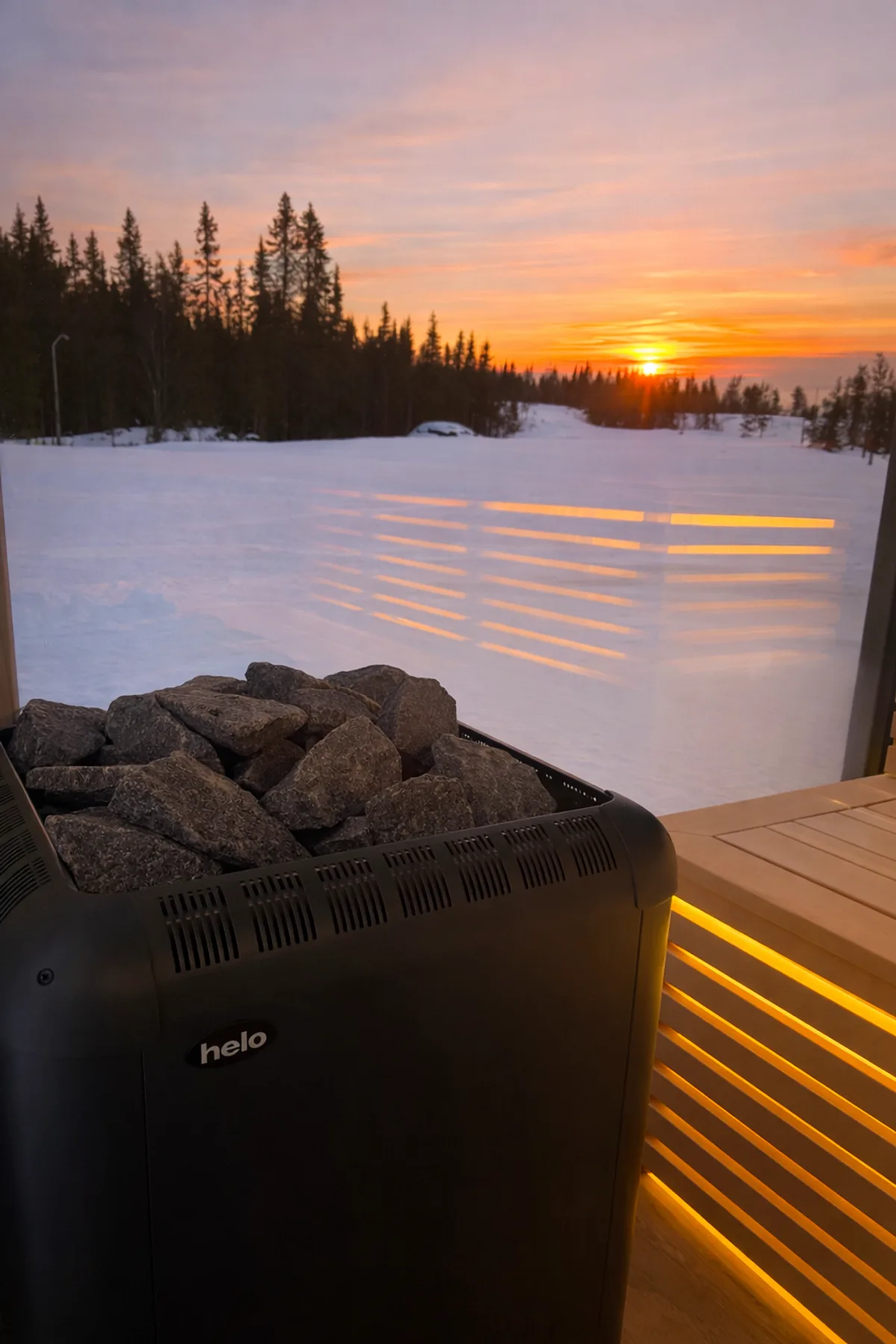
Ski, Snowshoe, Sled — Norway's Best Winter Sports Combined with Sauna
Norway's best winter sports paired with sauna: ski resorts with saunas at Trysil, Hafjell & Voss, cross-country skiing in Rondane, and Arctic dog sledding experiences.
The perfect Norwegian winter day follows a simple logic: exert yourself completely in cold air and snow, then submit entirely to heat. Ski until your legs are done, then find a sauna. Snowshoe across a silent plateau, then plunge into a snow-cold lake. The contrast — the sharp cold of a Norwegian winter and the enveloping warmth of a wood-fired sauna — is addictive in a way that the Norwegians have understood for centuries and that visitors discover, usually on their first day, with something approaching revelation. Norway has world-class skiing, some of the best cross-country terrain in Europe, dog sledding, snowshoe routes through national parks, and a sauna culture that pairs seamlessly with all of it.
Best Ski Resort Saunas — Trysil, Hafjell & Voss
Trysil — Norway’s Largest Ski Resort
Trysil, on the Swedish border in Innlandet county, is Norway’s biggest ski resort by piste count — 68 slopes and 32 lifts spread across a mountain that works well for every level, from families on gentle blue runs to experts seeking the steeper north-facing terrain. The resort has invested heavily in on-mountain facilities, and skiing here has a polished, Scandinavian-modern feel.
Skistar Lodge Trysil provides ski-in, ski-out accommodation with spa and sauna facilities at the base of the mountain. After a full day on snow, the proximity of skis to sauna is something you will appreciate more than you might expect. Trysil also has extensive cross-country trail networks in the surrounding forest, making it a resort that justifies multi-day visits beyond the downhill runs.
Hafjell & Øyer — Lillehammer’s Backyard
Hafjell, the alpine venue for the 1994 Lillehammer Winter Olympics, sits above the Gudbrandsdal valley just north of Lillehammer. The terrain is classic Norwegian alpine: steep, mostly forested, with a summit that opens onto a wide plateau and views extending to Rondane’s summits on a clear day. The resort is popular with Norwegian families and draws fewer international visitors than Trysil, which keeps the atmosphere pleasantly local.
Sus Sauna Mosetertoppen at Mosetertoppen above Øyer is one of the most atmospherically located resort saunas in the Lillehammer area — positioned on the hillside with views across the valley and into the ski terrain. The combination of a day’s skiing at Hafjell and an afternoon in the sauna here is a straightforward and excellent way to spend a Norwegian winter day.
Voss — Alpine Skiing Meets Wild Fjord
Voss is Norway’s adventure sports capital, and in winter that means serious alpine skiing, ski touring on the surrounding peaks, and access to terrain that extends far beyond the groomed pistes. The Voss Resort has invested significantly in recent years and the lift system now accesses high-altitude terrain with reliable snow conditions.
After skiing, Voss Hostel Badstu offers a well-regarded sauna experience in the town itself — the kind of social, unpretentious bathing culture that Norway does better than almost anywhere. Voss is also within reach of the Bergen region’s floating saunas for those wanting to extend the experience toward the fjord.
Cross-Country Skiing & Sauna — Rondane, Røros & Jotunheimen
Cross-country skiing (langrenn) is the original Norwegian winter sport, and the country’s trail networks are extraordinary. The real magic of Norwegian cross-country skiing is not the racing — it is the long, slow traversal of silent winter landscapes, the rhythm of gliding through birch forest or across open fells, and the particular satisfaction of returning cold and tired to somewhere warm.
Rondane Spa is the natural sauna destination for those skiing the Rondane National Park trail network — a landscape of open tundra-like plateau and distinctive rounded peaks that is extraordinary in winter conditions. The park’s cross-country trails are extensive, well-marked, and largely uncrowded compared to the commercial resorts. Rondane’s elk population is also frequently visible from the trail edges.
Røros is one of Norway’s most remarkable winter destinations: a UNESCO World Heritage mining town in the highlands of Trøndelag, receiving reliable snow from November through April and possessing an 18th-century townscape that looks exactly as it should beneath a metre of snow. The town’s preserved wooden buildings, the copper mine, and the local food scene (game, elk, traditional Norwegian winter dishes) are all exceptional. Bergstadens Hotel Spa provides sauna facilities within walking distance of the historic centre — essential after a day’s cross-country skiing on the surrounding plateau trails.
In Jotunheimen, Hindsæter Fjellspa is a mountain spa in the Sjoa valley area that operates year-round, making it a natural recovery destination for those skiing or snowshoeing in the Jotunheimen landscape.
Dog Sledding & Snowmobiling with Arctic Sauna
Norway’s Arctic provinces — Troms, Finnmark, and Svalbard — offer dog sledding at a level that goes from beginner half-days to full expedition-style multi-day journeys through the polar landscape. The combination of running a dog team through a silent Arctic winter environment and then recovering in a wood-fired sauna is one of those experiences that is simply not available anywhere else on earth.
In Finnmark, the snowmobile and dog sled trail networks extend for hundreds of kilometres into the interior, reaching Sámi communities and isolated winter landscapes that are inaccessible in any other season. Several Arctic operators around Alta, Karasjok, and along the coast combine guided dog sledding with outdoor sauna and traditional Arctic cuisine. Kirkenes, on the Russian border, is another established hub for Arctic winter activities including snowmobile safaris and ice fishing.
Morgedal Hotell in Telemark is worth special mention for its historical significance: Morgedal is considered the birthplace of skiing, the home community of Sondre Norheim — the 19th-century pioneer who effectively invented modern ski technique and equipment. Staying in Morgedal and skiing the same terrain that gave rise to the sport adds a dimension that no purpose-built resort can match.
Snowshoeing Routes Near Mountain Saunas
Snowshoeing — simpler to learn than skiing, requiring no lifts and no special technique — is one of the most accessible winter activities in Norway and one of the most rewarding. The country’s network of marked winter trails is primarily designed for cross-country skis, but snowshoes work on any packed or ungroomed snow surface, opening up terrain that skiers avoid.
The Rondane plateau, already mentioned for cross-country skiing, is equally excellent for snowshoeing: the terrain is relatively gentle, the views are extraordinary, and encounters with wildlife (elk, reindeer) are common in the quieter areas away from the main trail corridors.
The Røros area offers snowshoe routes through pine and birch forest that the ski trails don’t cover, including access to frozen lakes and elevated viewpoints above the mining town. Allow three to four hours for a half-day route.
In Jotunheimen, the Besseggen area in winter is a completely different experience from the summer hiking trail — snowshoe routes cross the lower slopes around Gjendesheim, and Besseggen Sauna provides the ideal endpoint for a cold-weather walk along the lake.
Hurdalsjøen Hotell Spa at Hurdalsjøen, less than an hour from Oslo, combines spa and sauna facilities with access to the lake and surrounding winter landscape — an accessible option for those without time to travel further into the mountains.
Planning a Winter Sports & Sauna Trip
The practical logistics of combining Norwegian winter sports with sauna are simpler than they might appear. Most major ski resorts either have on-site sauna facilities or are within easy reach of a quality sauna option listed in the Norwegian Saunas directory. The key decisions are:
Region: Oslo’s surrounds (Hafjell, Trysil, Rondane) for easy access and variety; Western Norway (Voss, Geilo) for the fjord dimension; Northern Norway (Tromsø area, Finnmark) for the full Arctic experience.
Duration: A three-night stay allows two full days of activity plus travel — workable for a Trysil or Hafjell trip. To experience Arctic Norway properly, allow five to seven days.
Timing: December through March is the reliable snow window for most of Norway. Røros and the inland highlands typically have the most consistent snow; coastal areas like Voss can have variable conditions. The Northern Lights are most active in February and March. Ski touring season extends into April and May in Jotunheimen.
The Norwegian winter rewards those who engage with it rather than observe from behind glass. Ski until you’re cold. Sauna until you’re warm. Repeat until you understand why Norwegians are consistently among the happiest people on earth.