Sauna After Hiking in Norway — The Best Post-Trail Wellness Experiences
Nothing restores tired hiking legs like a Norwegian sauna followed by a cold plunge. Discover the best sauna experiences near Norway's most famous hiking trails.
Norwegian hikers have known this for generations: the best part of a hard day on the trail is not the summit. It is the sauna afterwards.
There is something almost ceremonial about it — pulling off your boots, stretching out on a wooden bench in the dry heat, feeling the lactic acid begin to dissolve from muscles that climbed ridges and descended into valleys all day. Then the cold plunge. Then back into the heat. The body resets in a way that no amount of passive rest achieves.
This pairing of trail and sauna is not accidental. It has been built into Norwegian mountain culture for generations. Many of the country’s best hiking regions have sauna facilities nearby — some purpose-built, some adapted from traditional fishing or farming buildings. Here is how to combine them.
The Science of Post-Hike Sauna
The recovery benefits of sauna after exercise are well-documented. During a sauna session at 70–90°C, blood flow to skeletal muscles increases significantly as the body works to regulate temperature. This enhanced circulation accelerates the clearance of metabolic waste products — including lactate — from muscle tissue.
The heat also triggers the release of growth hormone, which supports muscle repair, and reduces markers of muscle damage when used consistently post-exercise.
The cold plunge after the sauna has its own recovery logic. Cold water immersion constricts blood vessels, reducing inflammation and swelling in tired muscles and joints. The contrast between heat and cold — alternating several times over a session — creates a pumping effect on the circulatory system that experienced Nordic bathers describe as a full-body reset.
Beyond the physiology, the enforced stillness of the sauna forces the kind of mental decompression that exhausted hikers rarely achieve through other means. You cannot scroll your phone in a 90°C sauna. You simply breathe and exist.
Best Hiking + Sauna Combinations by Region
Jotunheimen — Norway’s Mountain Heart
Jotunheimen National Park contains Norway’s highest peaks, including Galdhøpiggen (2,469m) and Glittertind, and some of its most legendary trails. The iconic Besseggen ridge — a narrow spine between two lakes of different colours — is one of the most walked day hikes in Norway.
Besseggen Sauna operates directly at the Besseggen trailhead area, making it the most logical post-hike recovery stop in the country. Walking back from the ridge and into a sauna is almost too perfect.
Nearby, Mad Goats Sauna Sjoa sits on the Sjoa river — a whitewater kayaking destination that also serves as a gateway to Jotunheimen trails. Their sauna has a cold river plunge that after a hot day on the trail feels genuinely restorative.
Hindsæter Fjellspa is a mountain lodge in the Jotunheimen area offering proper spa facilities alongside the sauna — a step up in comfort for those who want to make the recovery experience its own destination.
Rondane — Wilderness and Spa
Rondane, Norway’s oldest national park, is famous for gentler ridgelines and the distinctive rounded shapes of its peaks. The trails here are less technical than Jotunheimen but cover equally dramatic open tundra.
Rondane Spa is positioned near the national park boundary and offers one of the more developed wellness facilities in the Norwegian mountain interior — a proper destination spa where a day on the trails translates naturally into an evening of sauna and treatment.
Voss — Adventure Capital of Norway
Voss has built its identity around outdoor adventure, and its sauna scene reflects this. Wild Sauna Norway operates here, offering sauna experiences designed specifically for people who have spent the day hiking, paddling, or cycling in the surrounding terrain. Voss is also well-connected by rail from Bergen, making it accessible for a hiking sauna weekend without needing a rental car.
Geiranger and Romsdal
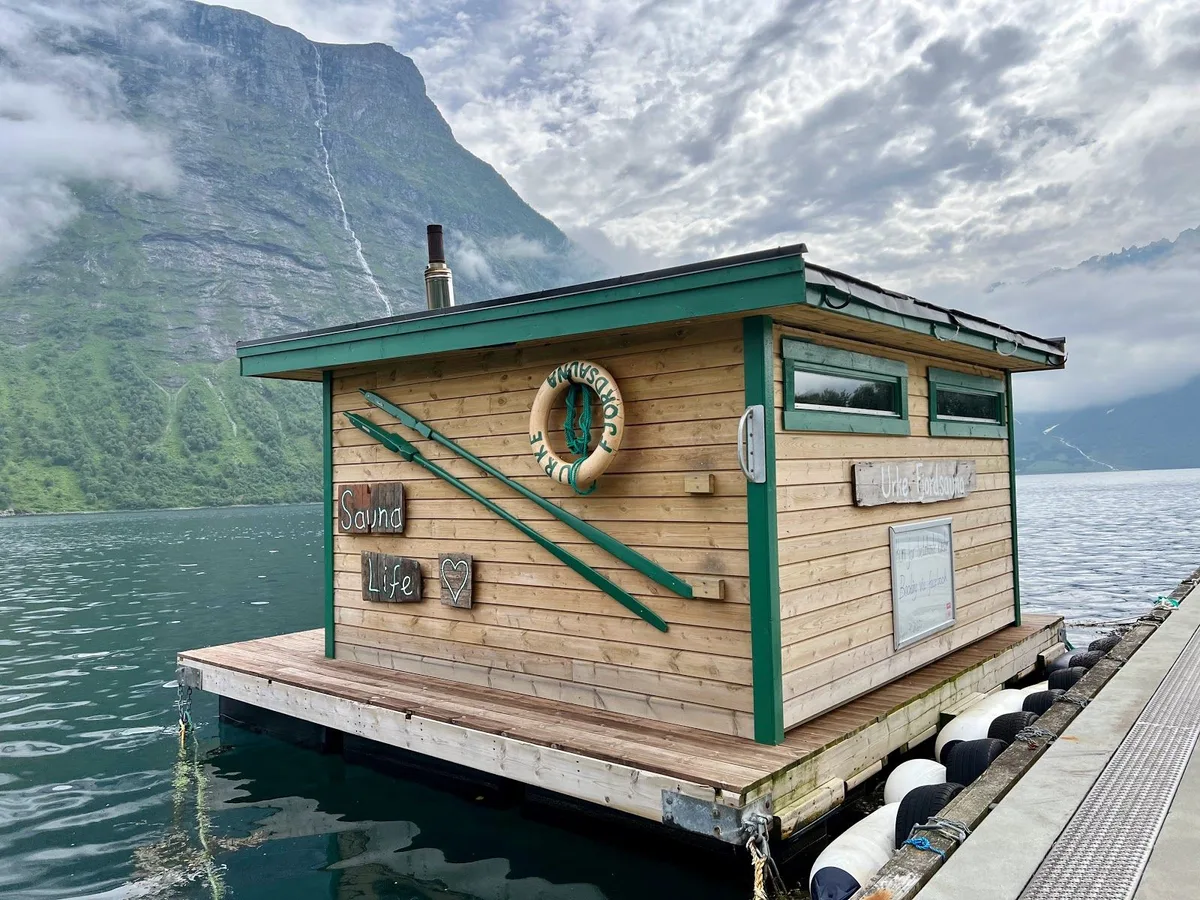
The trails above Geiranger offer views of one of Norway’s most famous fjords, and the descent back into the village is well rewarded by Roa Badstue Geiranger, a fjordside sauna where the cold plunge is directly into the glacier-green fjord water.
Telemark — Culture and Trails
Telemark combines dramatic hill terrain with deep cultural heritage — this is the region where skiing was invented. The trails are quieter than the national park circuit, and Saga Sauna Hjartdal offers a sauna experience rooted in the region’s traditions.
Mountain Escapes
Karlsvogna Fjellbad and Elvatun Friluftsspa both offer sauna in mountain or river settings with strong connections to the outdoor activity culture of their regions. Herangtunet Mountain Lodge combines accommodation with sauna access in a setting that works as a base for multi-day hiking.
What to Bring
A post-hike sauna session requires minimal additional kit beyond what you already carry:
Towel and flip-flops — most sauna facilities in Norway require a towel on the bench. Flip-flops protect your feet in shared changing areas and on wet wooden platforms.
Swimwear — norms vary by facility. Many Norwegian saunas are gender-segregated and nude bathing is standard. Mixed facilities typically require swimwear. Check in advance.
Dry clothes — your hiking kit will be damp and potentially odorous. Pack a set of dry clothes specifically for after the sauna — the contrast between the day’s exertion and clean, dry clothes in the evening is part of the ritual.
Electrolytes and water — a long hike followed by a sauna session means significant fluid and electrolyte loss. Bring more water than you think you need and consider electrolyte tablets.
Cash or card — most Norwegian sauna facilities take card payment, but some smaller community saunas still operate on cash or honour-system payment.
Tips for Combining Hiking and Sauna in One Day
Pace your hiking finish time. Many sauna facilities have booking slots or last entry times. Plan your trailhead departure so you arrive at the sauna with at least 90 minutes before closing — a rushed sauna session defeats the purpose.
Eat before the sauna, not after the hike. Going straight from a hard hike into a hot sauna on an empty stomach can cause light-headedness. Have a substantial snack or early dinner, rest for 30 minutes, then enter the sauna.
Start cooler than usual. After a physically demanding day, your core temperature is already elevated. Start your first sauna session at a cooler temperature or for a shorter duration than you normally would, and assess how your body responds.
Plan the cold plunge. The post-hike cold plunge is doubly effective — the body is already well-primed for contrast after a day of exertion. Commit to it. The shock fades quickly, and what follows is one of the most energised feelings accessible without medical intervention.
Book ahead in peak season. July and early August see Norwegian hiking trails and associated facilities at maximum capacity. Sauna slots at popular mountain locations like Besseggen Sauna can sell out days in advance during summer. Book as soon as your hiking dates are confirmed.
The combination of Norway’s exceptional trail network and its deeply embedded sauna culture is one of the country’s most underappreciated travel experiences. It transforms a physically demanding day into something complete — challenge and recovery, exertion and stillness, the mountain and the steam.