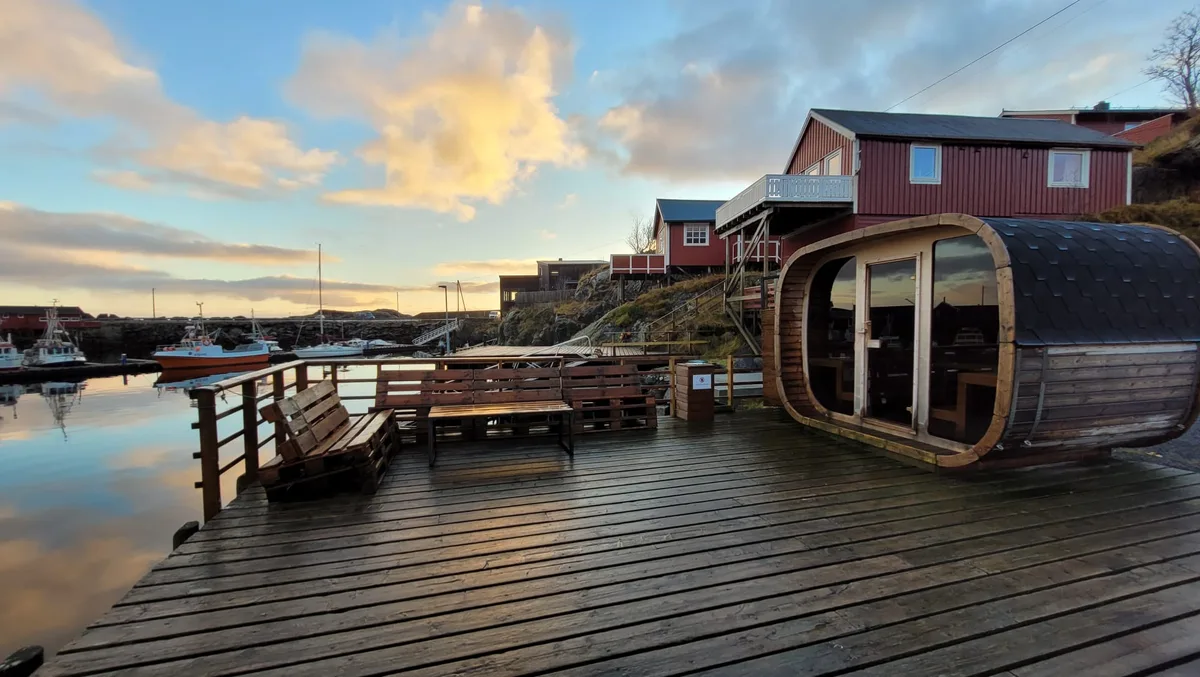
Sauna Experiences on Norwegian Islands — Remote, Wild & Unforgettable
Norway's thousands of islands hide some of the country's most extraordinary sauna experiences. From Lofoten to Hvaler, here's the best island sauna guide.
Norway has more than 50,000 islands. The overwhelming majority of them have no permanent population. Many have no infrastructure at all — no roads, no shops, no electricity grid. They are simply rocks and moss and seabird colonies rising from the North Atlantic.
And some of them have saunas.
The Norwegian island sauna experience is different in character from mainland wellness facilities. There is an edge to it — a sense of exposure, of being genuinely far from convenience, that gives the experience a quality impossible to replicate in a city spa. The sea is right there. The wind comes off the open water. The temperature between the sauna and the fjord is a gap your body crosses rather than an abstract concept.
Here is a guide to the best sauna experiences on Norwegian islands, from the Oslofjord archipelago to the High Arctic.
Lofoten Island Saunas
Lofoten is Norway’s most dramatic island group — a 160-kilometre chain of granite peaks that rise almost vertically from the sea, connected by bridges and tunnels and populated by fishing communities that have been here since the Viking age. In recent years it has become one of Europe’s most photographed destinations, and its sauna scene has grown to match.
Aurora Sauna Lofoten is the archipelago’s flagship sauna experience, positioned to maximise the already extraordinary views. In winter the Northern Lights arc over the mountains above the sauna; in summer the midnight sun colours the sky until it forgets to be night. The cold plunge is directly into the fjord.
At Reine — consistently voted one of Norway’s most beautiful villages, a cluster of traditional red fishing cabins called rorbuer on a rocky islet — Catogarden Sauna offers a sauna experience embedded in the authentic fabric of Lofoten fishing culture. This is not a purpose-built wellness facility: it is a working part of a traditional Lofoten property, and it feels it.
On Værøy — one of Lofoten’s outermost islands, accessible only by ferry or helicopter and home to one of Norway’s largest puffin colonies — Flyt SaunaVærøy offers possibly the most remote sauna experience in Lofoten proper. The island sees a fraction of the visitors that Reine and Henningsvær attract, and the sense of solitude on Værøy, surrounded by open ocean on all sides, is profound.
Helgeland Archipelago Saunas
South of Lofoten, the Helgeland coast is Norway’s most island-dense stretch of coastline — a labyrinth of skerries, sounds, and outer islands backed by jagged coastal peaks. This is less touristed than Lofoten, which means lower prices, quieter experiences, and the genuine sense of discovery that Lofoten sometimes struggles to maintain at peak season.
Lurøy Utleie Badstu operates on Lurøy island, a small community in the Helgeland archipelago reachable by local ferry. The sauna here has the unhurried quality of a place where tourism is not the dominant industry — it is a community facility open to visitors, and the welcome is genuine.
Træna Badstue Naust is on Træna — Norway’s outermost inhabited island group, 35 kilometres offshore and accessible only by express boat or ferry from Sandnessjøen. Træna is famous for its annual music festival, one of the most remote in the world, but it has a permanent community and a sauna in a traditional naust (boathouse) that embodies the Helgeland coast’s relationship with the sea.
Plura Valley Sauna operates in the Helgeland interior, near the Plura river system — one of Norway’s best whitewater destinations and home to a renowned underwater cave system. The combination of river landscape and sauna gives this a different character from the coastal island experiences, but it belongs to the same wild Helgeland spirit.
Oslofjord Island Saunas
The Oslofjord is Norway’s most populated coastal landscape — a 100-kilometre fjord bracketed by Vestfold to the west and Østfold to the east, dotted with islands that have served as summer retreats for Oslo residents for over a century. The sauna culture here is older, more established, and more community-rooted than the newer Arctic sauna scene.
Hvaler Badstuforening operates in the Hvaler archipelago, where the Oslofjord opens into the Skagerrak. Hvaler is a protected national park of low-lying granite islands popular with Norwegian kayakers and sailors. The badstuforening (sauna association) model — a membership-based community sauna — is deeply Norwegian, and Hvaler’s version is one of the best examples. Visitor passes are typically available for non-members.
The Hvaler experience is notably different from the Arctic island saunas: the scale is more intimate, the surroundings are warmer and greener, and the cultural context is Oslo-adjacent weekend culture rather than remote Nordic wilderness. Both have their place.
Western Fjord Island Saunas
The islands and skerries of western Norway — between Bergen and Ålesund — form a coastal zone of extraordinary complexity. Fjords cut deep inland, outer islands face the full force of the North Atlantic, and the landscape shifts between sheltered cultivation and exposed rock within kilometres.
Askrova Sauna sits on an island near Florø, Norway’s westernmost city. Askrova is a small community island with good ferry connections to the mainland, and the sauna here benefits from the island’s position — close enough to the open coast that the air has genuine Atlantic character.
Nyt Skalvikfjorden offers sauna access in the Sunnmøre area with fjord swimming and the surrounding coastal landscape that makes this part of western Norway one of the most scenic stretches of Norwegian coast.
Trøndelag and Hitra
Destinasjon Kvenvær Badstue operates on an island off Hitra — Norway’s fourth-largest island — in the Trøndelag coast. Hitra and its surrounding archipelago are known for exceptional seafood (particularly crab and fish) and a slower pace of life than the major tourist routes. The sauna here is part of a wider local activity offering and represents the kind of experience that rewards travellers who look slightly beyond the obvious.
How to Reach Island Saunas
Norwegian island access is generally well-served by the country’s extensive ferry network, but timing requires attention:
Express boats (hurtigbåt) connect many coastal communities on schedules that work for day trips from larger towns. Træna, Lurøy, and the Helgeland islands are typically reached this way.
Local ferries (ferje) run throughout the day on popular routes and can carry vehicles. The Lofoten ferry from Bodø to Moskenes is the main access route for Lofoten islands from the south.
Hurtigruten — the famous coastal express — stops at Lofoten, Helgeland, and Tromsø among many other ports, and works well as a one-way transport option if you are road-tripping northward.
Water taxis and boat hire can reach islands with no scheduled ferry service. Many sauna operators on remote islands can arrange pick-up from a larger nearby island or mainland jetty — ask when booking.
Planning Tips
Book transport before sauna slots. On remote islands with limited ferry departures, missing the last boat means finding accommodation you did not plan for. Always confirm your return transport before confirming a booking.
Combine with local food culture. The Norwegian island coast is one of Europe’s great seafood regions. A sauna followed by fresh crab or fish in a local restaurant is an evening that represents Norway at its most characterful.
Weather contingency. Coastal Norwegian weather is changeable at any time of year, and storm conditions can affect ferry services. Build flexibility into any island itinerary — an extra night’s accommodation budget as insurance is sensible.
Pack light but pack right. Island access often involves boat travel with limited luggage space. A compact dry bag with sauna essentials (towel, swimwear, flip-flops, spare clothes) is more practical than a large suitcase.
Norway’s 50,000 islands are one of the country’s greatest and most underused assets for travellers. The saunas on them are some of the most extraordinary wellness experiences in Europe — remote, genuine, and entirely their own.